Skip to product information
1 of 4

Yellow Rattle Seeds — Rhinanthus minor (Native Wildflower)

Yellow Rattle Seeds — Rhinanthus minor (Native Wildflower)

Regular price $14.00 USD
Regular price Sale price $14.00 USD
Sale Sold out
Quantity

How to Sow and Plant

Sow in late autumn so seeds receive natural winter cold (needed for germination).

Cut grass very short (1–2 cm) before sowing.

Rake or scarify the soil surface to expose at least 50% bare soil.

Broadcast the seeds evenly over the prepared area.

How to Grow

Keep the area undisturbed after sowing so seedlings can establish among the grasses.

Allow the seeds to experience natural winter cold; germination begins in early spring.

Once seedlings appear, ensure grass competition stays low—avoid fertilizing, as rich soil favors grasses.


Maintain the area in full sun to partial shade with well-drained, low-fertility soil.

Tips

Sow in autumn for best germination — the seeds need winter cold.

Avoid rich or fertilized soil, as strong grasses will outcompete Yellow Rattle.

Cut grass very short before sowing to help seeds reach the soil surface.

Do not mow until after seed pods dry and rattle, so the plants can reseed.

Shipping

Orders are processed within 1–2 days.
Delivery is completed within 10-15 days from the date of order.
Tracking details are shared once the order is dispatched.
Secure, moisture-protected packaging for all seed orders

View full details
About
Product Information
Features
life-cycle

LIFE CYCLE

Annual

plant-characteristics

PLANT CHARACTERISTICS

Hemiparasitic on grasses

growth-habit

GROWTH HABIT

clump-forming

bloom-season

BLOOM SEASON

Late spring

flavour-profile

FLAVOUR PROFILE

ornamental

suitable-for

SUITABLE FOR

Outdoor

About
Yellow Rattle Seeds — Rhinanthus minor (Native Wildflower)
seed-type

SEED TYPE

True seed

plant-type

PLANT TYPE

Wildflower

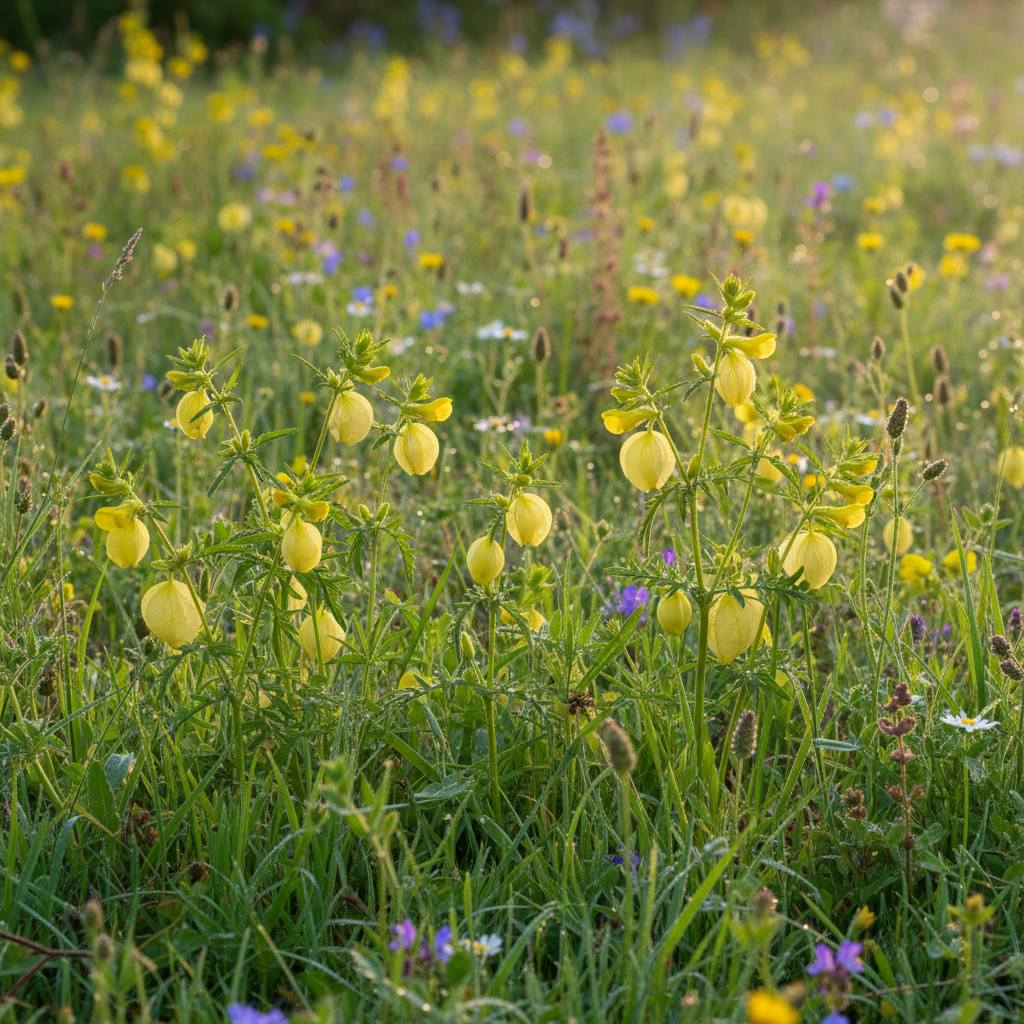
Yellow Rattle (Rhinanthus minor) is a hemiparasitic wildflower used to reduce grass vigour and create niche space for other wildflowers. It is commonly sown into prepared grassy areas or meadows in late autumn; seeds require a period of cold to break dormancy and produce spring seedlings. Ideal for low-fertility turf and meadow restoration projects; valued by ecologists and gardeners for encouraging biodiversity.

Planting information
planting-season

PLANTING SEASON

Autumn

fruit-size

FRUIT SIZE

1–2 cm

plant-height

PLANT HEIGHT

30–60 cm

light-requirement

LIGHT REQUIREMENT

Full Sun

water-needs

WATER NEEDS

Low to Moderate

hardiness-zones

HARDINESS ZONES

3–7

container-garden

CONTAINER GARDEN

Not Suitable

plant-spacing

PLANT SPACING

2–3 inches

planting-depth

PLANTING DEPTH

0–2 mm

growing-conditions

GROWING CONDITIONS

Low-fertility soil

Coverage
Seed Count
Recommended Coverage
Seed Count
100
GTN
036000140842